
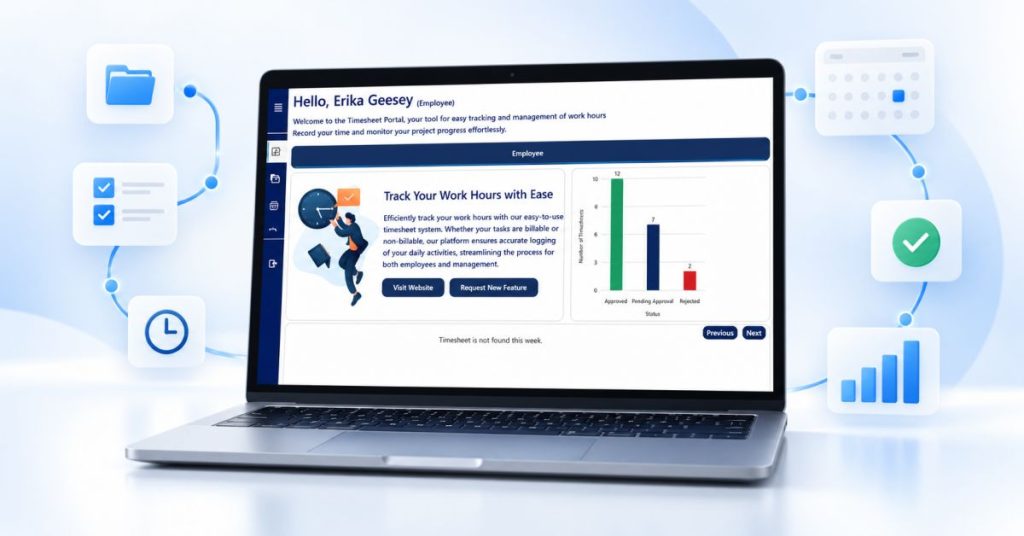
How to Track Project Hours in Microsoft 365
How to Track Project Hours in Microsoft 365 Microsoft 365 is already part of the daily workflow for many project-based organizations. Teams use it for communication, document management, collaboration, and reporting. But what about tracking the hours employees spend on projects? Can Microsoft 365 be used for project time tracking? Yes. Organizations can use Microsoft 365 and SharePoint to create a structured process for collecting project hours, managing timesheets, approving entries, and preparing the data for reporting. The important part is designing the process around the way project teams actually work. What Is Microsoft 365 Project Time Tracking? Microsoft 365 project time tracking is the process of recording the time employees spend working on specific projects and tasks within the Microsoft ecosystem. There is an important difference between general employee time tracking and project time tracking. Employee time tracking answers: How many hours did an employee work? Project time tracking adds another question: What project or task did those hours go toward? For project-based organizations, that additional context is critical. A useful project time-tracking process connects: Employee → Project → Task → Hours → Approval → Reporting Why Track Project Hours? Project hours provide more than a record of employee activity. When employees consistently record their time against projects and tasks, organizations can gain a clearer understanding of where effort is being allocated. Project time tracking can help teams: Record hours against specific projects Track effort at the task level Separate billable and non-billable hours Create a structured timesheet approval process Identify missing timesheets Report on employee and project hours Prepare data for further analysis The quality of project reporting depends heavily on the quality of the information collected at the beginning of the process. How to Track Project Hours in Microsoft 365 A practical workflow can be divided into several stages. 1. Set Up Projects and Tasks Start by defining the projects and tasks employees will record time against. For example: Project: Construction Project A Tasks: Site preparation Engineering Procurement Installation Quality inspection Project management The structure will vary by organization, but employees should have a consistent way to identify where their time was spent. 2. Employees Enter Their Hours Employees record the hours they worked against the appropriate project and task. A structured timesheet makes this process more consistent than asking employees to maintain separate spreadsheets. Depending on the organization’s requirements, entries may include: Date Project Task Hours Billable/non-billable classification The objective is simple: Capture project time as close to the actual work as possible. 3. Employees Submit Their Timesheets After completing the required entries, employees submit their timesheets for review. This creates a clear distinction between: Time entered and Time submitted. A defined submission process also makes it easier for managers to understand which timesheets are ready for review. 4. Managers Review and Approve Managers then review submitted timesheets. They may need to check: Are the expected hours recorded? Are the correct projects selected? Are the appropriate tasks being used? Are there unusual entries? Does anything require clarification? The timesheet can then be approved or rejected according to the organization’s workflow. This approval step helps create greater confidence in the information before it becomes part of project reporting. 5. Identify Missing Timesheets A good process should also answer: Who hasn’t submitted their timesheet? Without this visibility, managers may have to manually check spreadsheets, emails, or messages to determine whether everyone has submitted their hours. A missing-timesheet report or view can make this process much easier. This becomes particularly important when project reports need to be prepared on a weekly or monthly deadline. 6. Report on Project Hours Once timesheets have been submitted and processed, the information can be used for reporting. Depending on the system, project teams may want to review: Total project hours Employee hours Task hours Billable hours Non-billable hours Approved hours Missing submissions Hours over a selected date range The purpose is not simply to produce another timesheet. The goal is to turn individual time entries into useful project information. How SharePoint Fits Into Project Time Tracking SharePoint can provide the foundation for managing structured project and timesheet information within Microsoft 365. For organizations already using SharePoint, this can be an attractive approach because project time tracking can remain within the existing Microsoft 365 environment. However, creating a complete timesheet process involves more than simply creating a SharePoint list. A practical solution may need to address: Employee time entry Projects and tasks Timesheet submission Manager approvals Validation rules Missing timesheets Reporting Permissions Data exports Analytics This is where a purpose-built SharePoint timesheet application can help. What About Power BI? Project time data becomes even more useful when it can be connected to business reporting. Organizations using Power BI can use timesheet information as part of their reporting and analytics environment. For example, project teams may want to analyze: Hours by project Hours by employee Billable vs. non-billable hours Project effort over time Task-level effort The specific dashboard and analysis requirements will depend on the organization. The important point is that structured timesheet data provides a better foundation for reporting than disconnected employee spreadsheets. Where Timesheet Pro 365 Fits Timesheet Pro 365 is designed for organizations that want to manage project time tracking and timesheets within Microsoft 365 and SharePoint. The workflow is straightforward: Employees Record hours against projects and tasks. ↓ Managers Review and approve submitted timesheets. ↓ Organization Gets structured project time data. ↓ Project Teams & Leadership Use reports and Power BI to understand project effort. Timesheet Pro 365 is not designed to replace project management platforms such as Primavera P6 or Microsoft Project. Instead, it can complement those tools by providing structured project time information that can support reporting and decision-making. [Internal Link: Timesheet Pro 365 Features] Microsoft 365 Project Time Tracking vs. Excel Excel can absolutely be used to track project hours. For a small team with a simple process, a spreadsheet may be enough. The challenge usually appears as the number of employees, projects, managers, and reporting requirements increases. Requirement